Live coin auctions create a unique atmosphere where collectors, investors, and dealers compete for rare pieces in real time. Major houses such as Heritage and Stack’s Bowers run regular sessions in cities like Dallas, New York, or Las Vegas, combining floor bidding with digital participation. These events draw serious interest because certified coins often sell at strong premiums, sometimes 10–20% above estimate, driven by scarcity and active bidding.
Even though it might seem a mess at the very start, the planned approach and a coin value lookup tool will make it easier.
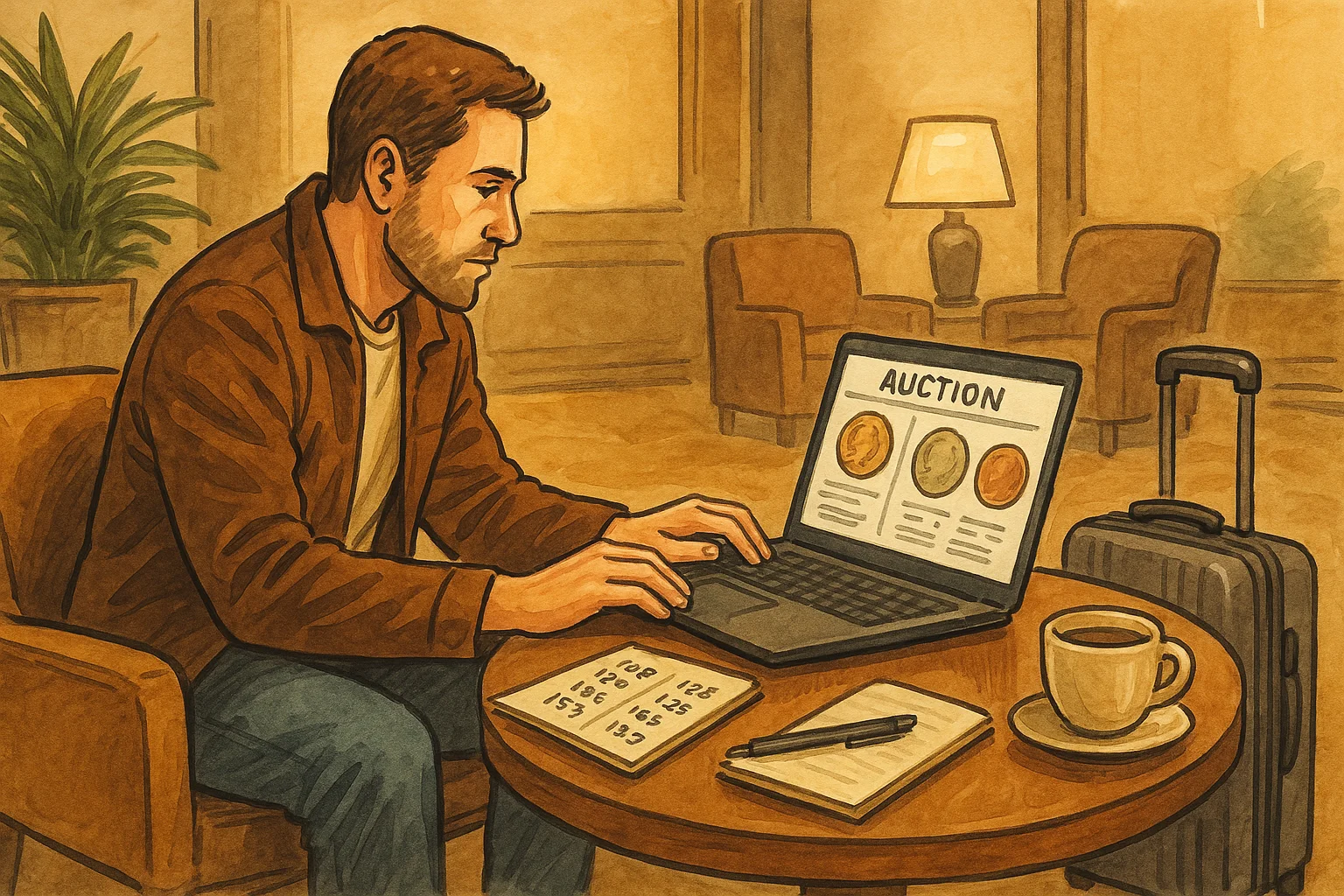
How Live Coin Auctions Work and How to Research Houses and Lots
Before attending your first auction, research becomes essential. Each auction house publishes detailed catalogs ahead of time. These catalogs include photos, grading information, provenance notes, and starting estimates for every lot. This material forms the foundation of your preparation.
A quick scan is never enough; the most successful bidders review similar past sales to understand real pricing trends. Aggregators such as Numisbids and Sixbid make this process easier by storing thousands of hammer results across many years. For example, tracking recent MS-65 sales of a 1916-D Mercury Dime helps you see that these coins often close around the $5,000 range.
A solid research routine usually includes:
- Checking high-resolution images for marks, tone, or signs of cleaning.
- Comparing prices from previous auctions to spot overestimated or undervalued lots.
- Reading provenance descriptions that can raise interest and long-term value.
- Studying mintage data and survival rates to understand actual rarity.
Modern tools help with fast verification. Many collectors use the best free coin identifier app for iPhone during previews or breaks. A simple photo scan connects to mint year, metal composition, weight, and basic market ranges from a database of more than 187,000 coins. This does not replace grading expertise, but it helps confirm types quickly when browsing large lots.
Once you understand how auction houses structure their sales and how to evaluate lots, the event becomes far less intimidating.
Register, Set a Budget, and Use Smart Bidding Strategies
Registration is simple but structured. Most auction houses offer online sign-up, while some issue paddles in person after checking ID. High-value sessions may require a small deposit. Keep these added costs in mind because the final price always includes a buyer’s premium of 15–25% plus shipping.
Set a Clear Budget
A firm spending limit protects you during fast bidding rounds. Use this checklist:
- Compare recent auction results for each lot.
- Add the buyer’s premium to your planned maximum.
- Prioritize PCGS and NGC certified coins for safer valuation.
- Write down your limits and stick to them as the session progresses.
Avoid spontaneous raises. Emotional bids often push prices far above fair market value.
Use Commission and Remote Bids
If you cannot attend:
- Absentee/commission bids activate automatically during the sale.
- Online platforms like Heritage Live allow real-time participation with quick prompts.
Both methods prevent rushed decisions during the auction and help maintain discipline.
Practical Bidding Tactics
Live bidding moves quickly, so a simple approach helps:
- Observe the auctioneer’s rhythm before entering.
- Lift your paddle only when increments approach your target price.
- Join late in the bidding round to avoid attracting early competition.
- Track competitor behavior and avoid stepping into a steep bidding surge.
Verify Details During Previews
On-site previews remain the best time to check coins. Digital tools can support the process. The coin value app Android helps confirm coin types, metal content, mint years, and general price tiers through quick photo identification. Its database of over 187,000 coins is useful for verifying basic specs while you move between lots.
With clear limits, steady tactics, and reliable verification, bidding becomes far more manageable.
Post-Auction Logistics and Common Pitfalls to Avoid
Winning a lot marks the start of several important steps. Auction houses expect fast payment, typically within a few days. Most accept wire transfers, checks, or approved online methods. Always check the invoice carefully—insurance, handling, and shipping can add 5–10% to the final cost. If the coin is high value, insured delivery or in-person pickup is the safer option.
After You Receive the Coin
Once the shipment arrives:
- Inspect the slab or holder for cracks or damage.
- Confirm the certification number with PCGS or NGC’s database.
- Photograph the coin for your own records.
- Store it immediately in a controlled environment such as a safe or vault.
Provenance matters. Keep invoices, catalogs, and any written notes. These documents strengthen resale value and help future buyers verify authenticity.
Avoid These Common Auction Mistakes
Many newcomers run into the same problems. A simple awareness list keeps your experience smooth:
- Skipping previews: surface issues and cleaning marks often hide in photos.
- Bidding on raw coins: uncertified pieces carry high risk of counterfeits or altered dates.
- Ignoring premiums and extra fees: these turn a “good deal” into an overpayment.
- Chasing the crowd: competitive bidding can escalate quickly and drain your budget.
- Trusting vague listings: always verify details before placing a bid.
Build Good Habits Early
Successful auction buyers follow a routine:
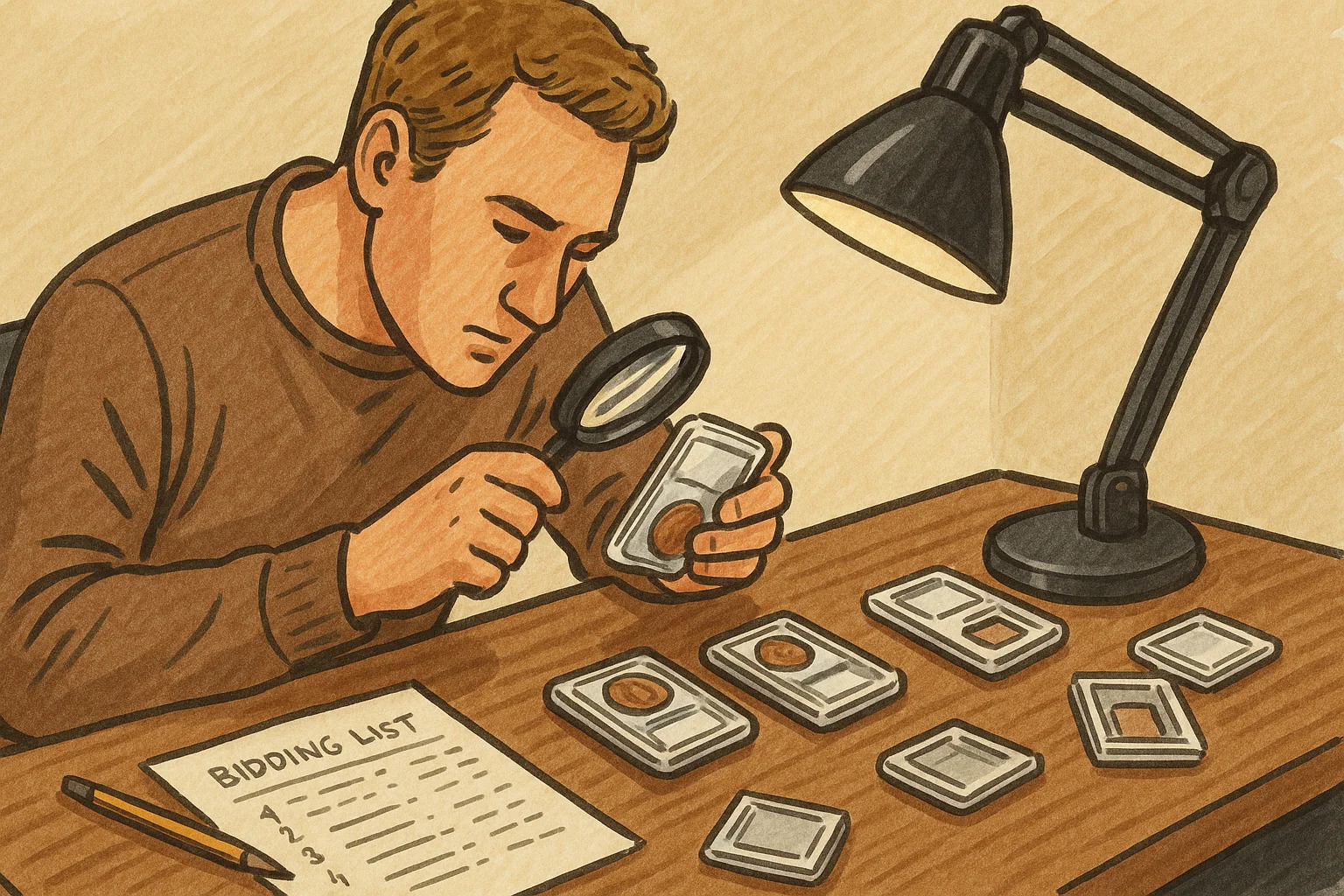
- Arrive early for previews and handle coins under proper lighting.
- Bring a loupe or small lamp for closer inspection.
- Talk to dealers and collectors at the venue; their insights often save money.
- Keep notes on lots you pass on—patterns in pricing and quality become clear over time.
A digital tool helps with quick checks as well. Using a photo-based app like Coin ID Scanner keeps your identification steps simple and consistent through basic specs and market ranges.
With a solid grasp of logistics, smart habits, and awareness of risks, your first live auction becomes a confident experience. Each session builds skill, making future trips smoother, more strategic, and far more rewarding for both collecting and investing.